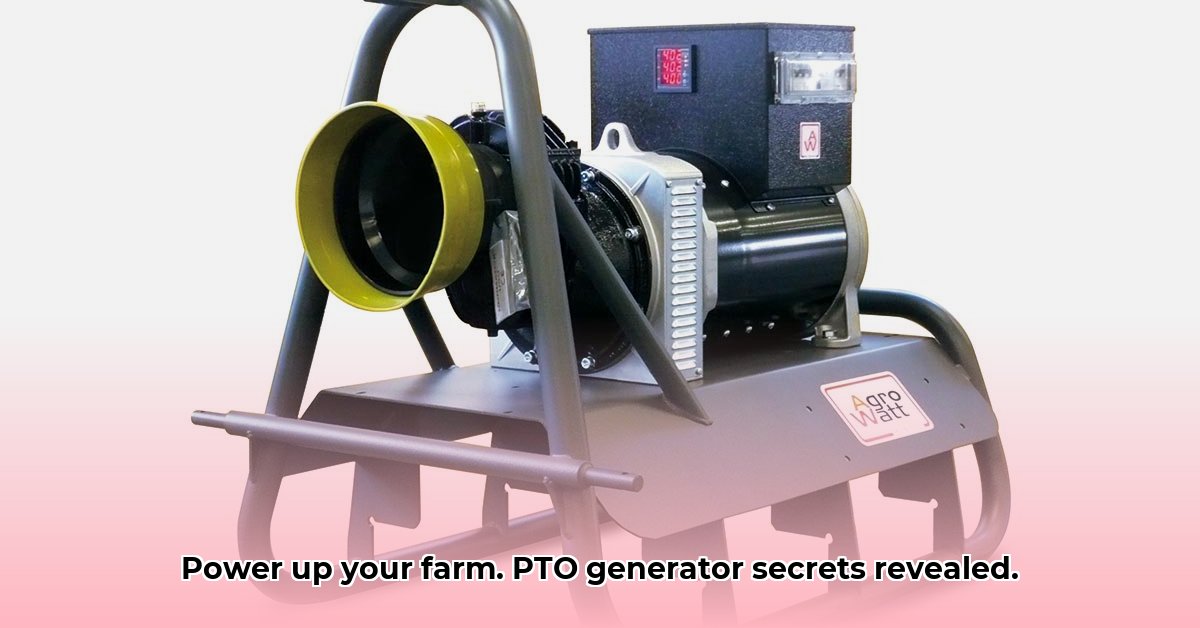
Powering your farm efficiently and sustainably is crucial. PTO generators offer a smart solution, directly linking to your tractor's power takeoff (PTO) shaft to generate electricity. This guide will walk you through choosing, installing, maintaining, and utilizing a PTO generator for optimal farm operations and environmental responsibility. For more in-depth information, check out this helpful resource.
Understanding PTO Generators for Tractors
A PTO generator uses your tractor's power to create electricity. It converts the rotational power from your tractor's PTO shaft into usable electricity. The system typically comprises three main parts: the PTO shaft (your tractor's rotating output), the generator head (where electricity is produced), and a control system managing power flow. Several types exist, varying in power output (kilowatts or kW), size, weight, and features (like voltage regulation and automatic shutoff).
Selecting the Right PTO Generator for Your Tractor
Choosing the right PTO generator involves several key considerations:
Tractor Horsepower: Ensure your tractor has sufficient horsepower to power the generator without strain. Choose a generator with a horsepower rating below your tractor's capacity for a safety margin. Consult your tractor's manual.
Power Needs: List all equipment you'll power and check their wattage ratings. Add these to determine your total power requirement, adding a 10-20% buffer for future needs.
Budget: PTO generators vary widely in price. Higher-quality generators may cost more upfront but save money long-term through reduced maintenance.
Essential Features: Consider automatic voltage regulation, overload protection, and easy-to-read control panels. Durable construction is also essential for long-term performance.
Installing and Maintaining Your PTO Generator
Correct installation is vital for safety and functionality. Always follow manufacturer instructions diligently.
Safety First: Disconnect your tractor's battery before installation to prevent accidental starts and shocks.
Secure Mounting: Securely bolt the generator to a suitable mounting point on your tractor, ensuring stability.
PTO Shaft Connection: Carefully align and engage the tractor's PTO shaft with the generator's input shaft. Ensure a secure connection.
Wiring and Electrical Connections: Follow the generator's wiring diagram carefully or seek help from a qualified electrician. Proper wiring prevents electrical hazards.
Routine maintenance is essential for longevity. Regularly inspect belts, check fluid levels (if applicable), and keep the generator clean. Address any issues promptly. Consult your owner's manual for specific maintenance schedules.
The Environmental Advantages: Sustainable Farming
PTO generators offer significant environmental benefits:
- Fuel Efficiency: They're highly fuel-efficient compared to standalone generators, leading to reduced fuel consumption.
- Reduced Emissions: Lower fuel use translates to minimized emissions, contributing to cleaner air and a smaller carbon footprint.
- Energy Independence: Reduced reliance on the electrical grid increases energy independence, making your farm more resilient to power outages.
Safety First: Working Safely with Your PTO Generator
Safety is paramount. Always:
- Avoid Wet Conditions: Never operate in wet or damp conditions to prevent electrical shock.
- Keep Clear of Moving Parts: Avoid contact with moving parts while the generator is running.
- Regular Inspections: Regularly inspect safety components (belts, wiring, ground connections) and replace anything damaged or worn.
- Follow Manufacturer Instructions: Your owner's manual is your key safety resource. Read it carefully before use.
PTO Generators: The Bottom Line
PTO generators are a reliable, cost-effective, and environmentally friendly power solution for farms. Their versatility and adaptability make them an excellent investment for sustainable and efficient farming operations. They offer increased power reliability and reduce reliance on the electrical grid and its associated costs. Consider the long-term benefits and how a PTO generator can improve your farm's sustainability and efficiency.
How to Choose the Best PTO Generator for Sustainable Farming
Choosing the right PTO generator for sustainable farming involves careful planning. Key factors include:
Power Requirements (kW): Calculate the total power needs of your farm equipment. Use the 2HP:1kW rule of thumb for estimation.
Tractor Compatibility (HP): Ensure sufficient tractor horsepower to drive the generator without strain.
Phase (Single vs. Three): Choose single-phase for basic needs or three-phase for higher power demands.
Budget: Account for both initial costs and ongoing maintenance.
Features: Prioritize features like voltage regulation, overload protection, and user-friendly controls.
Installation and Maintenance: System Longevity
Proper installation and routine maintenance are critical for long-term performance.
Professional Installation (Recommended): Follow manufacturer instructions carefully or consult a professional for secure mounting and wiring.
Regular Maintenance: Perform routine checks, oil changes, filter replacements, and cleaning as per the manufacturer's recommendations.
Troubleshooting: Be prepared to identify and address common issues such as belt slippage or electrical malfunctions.
Safety: Always disconnect the PTO shaft before maintenance. Never operate the generator near water.
Sustainability Benefits: Environmental Responsibility
PTO generators contribute to sustainable agriculture:
Reduced Fuel Consumption: By eliminating the need for a separate power source, you directly reduce fuel consumption and greenhouse gas emissions.
Lower Emissions: The reduced fuel use leads to significantly lower emissions of harmful pollutants, improving air quality in the surrounding environment.
Energy Self-Sufficiency: They provide energy independence, minimizing reliance on the electricity grid and associated costs.
Safety Precautions: Protecting Yourself and Equipment
Safety measures are non-negotiable:
Guard Moving Parts: Ensure all moving parts have adequate safety guards.
Lockout/Tagout Procedures: Implement lockout/tagout procedures before performing maintenance.
Grounding: Ensure proper grounding to prevent electrical shocks.
Fuel Handling: Handle fuel safely, preventing spills and leaks.